Words from the archivist…
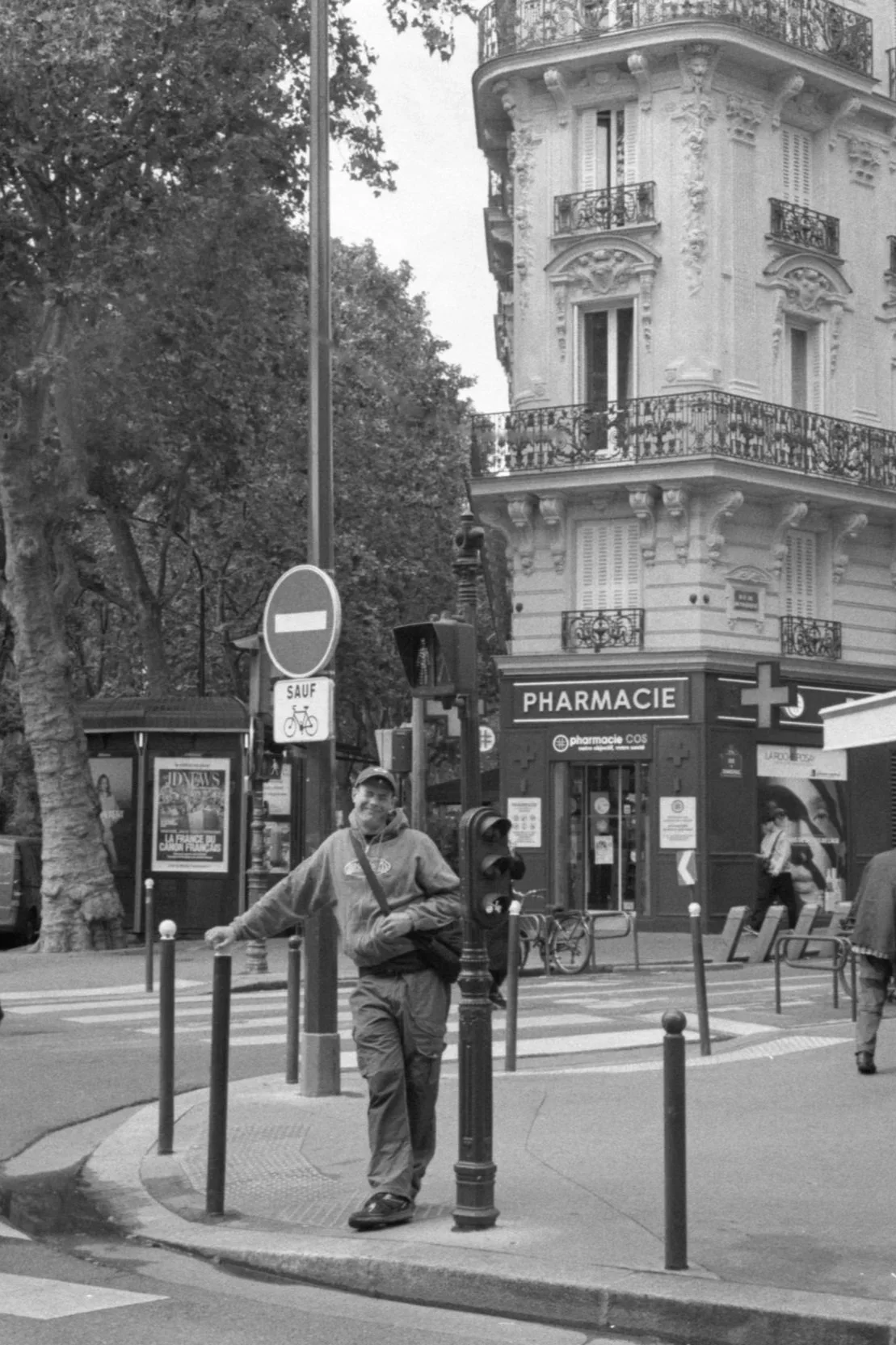
I am reluctant to write much on myself in fear of taking away the light from the man who this project is dedicated to, so I will stick to the basics. I am Misha, and Nikos Kolovos is my late grandfather-in-law as I am married to his granddaughter, Alessandra, who you may have seen in some photos of and also her short story of her grandfather and the fairies. You may read more about myself and my photography practice in the link below about the archivist.
Prior to commencing this project, I had worked through an archival project of my own which centred my own archive, my own history and my own photographs. I have published a first edition book of this personal archive, and soon the second edition will be available for sale to the larger public. This project, here, concerning Nikos Kolovos’s work started during Easter 2025 when I was staying in my wife’s family’s home in Stagiates, Greece on Mount Pelion. This house contains Nikos Kolovos’ offices, one of many that he had although I believe it to be his favourite, and within it, I discovered boxes upon boxes of slide film and other film photography material. I also discovered newspaper clippings, weekly or daily planners (imerologia in Greek), and cultural reference materials, cameras, personal letters, alongside all of his books, many of which were in English and French. Given my interest in working with extensive collections of photographic material, I decided (and I received permission from my late grandmother-in-law, Niki Kolovou, who was the owner of the collection at the time) to remove the archive from his office and bring it to the Netherlands where I live with my wife, Alessandra.
In the Netherlands, and as part of my Masters in Lens-Based Media at Piet Zwaart Institute, I began to scan the archive to digitalise it. This project has taught me many things about working with another’s work, how to try and understand it (and whether that is even possible), the ethics around such work, or whether safeguarding is the point. The largest joy, however, has been in archiving the work digitally and being able to share it with those who knew Nikos Kolovos, many of whom are present in the photographs you have seen. This is the reason why I decided to archive the project publically online, because Nikos, which you may have guessed given his transnational network and his love of travel and his multilingual mind, had friends and family all over the world, from the United States to Canada to Greece.
I welcome all to share in this experience, whether you are just stumbling on this archive or whether you knew Nikos personally. If you have words to share, a story or just thoughts, or if you would like to know more of Nikos, or if you would like to use his archive for research purposes, I welcome you to contact me on my site where you may find also my social media, or using the contact button here.
Thank you, Misha.
Further ReadingAhmed, S. (2014). Cultural Politics of Emotion. Edinburgh University Press.
Anderson, B. (2009). Affective atmospheres. Emotion, Space and Society, 2(2), 77–81. https://doi.org/10.1016/j.emospa.2009.08.005
Berger, J. (2013). Understanding a Photograph. Penguin UK.
Hirsch, M. (1997). Family Frames: Photography, Narrative, and Postmemory. Harvard University Press.
Hirsch, M. (2012). The Generation of Postmemory: Writing and Visual Culture After the Holocaust. Columbia University Press.
Malcolm, J., Frazier, I., & Malcolm, A. (2023). Still Pictures: On Photography and Memory. Farrar, Straus and Giroux.
ROBERTO, O. (2020). Aby Warburg: Bilderatlas: Mnemosyne - The Original. Hatje Cantz Verlag.
Tuan, Y. (1977). Space and Place: The Perspective of Experience. University of Minnesota Press.
Wagner-Tsoni, I. (2019). AFFECTIVE BORDERSCAPES: Constructing, Enacting and Contesting Borders Across the Southeastern Mediterranean [Malmo University]. https://scispace.com/pdf/affective-borderscapes-constructing-enacting-and-contesting-d6e297rz17.pdf