Cluster III: Sacred Labor
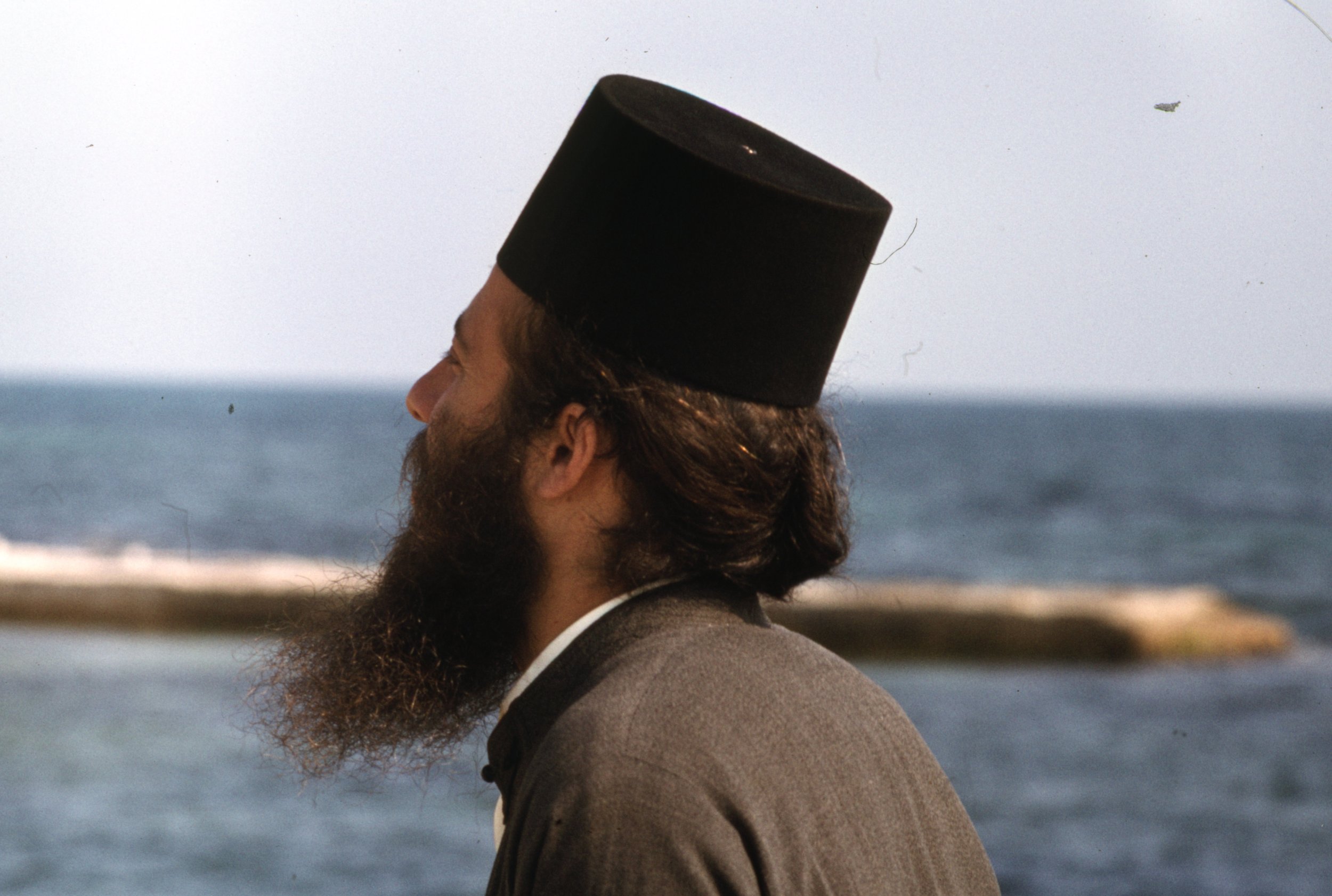
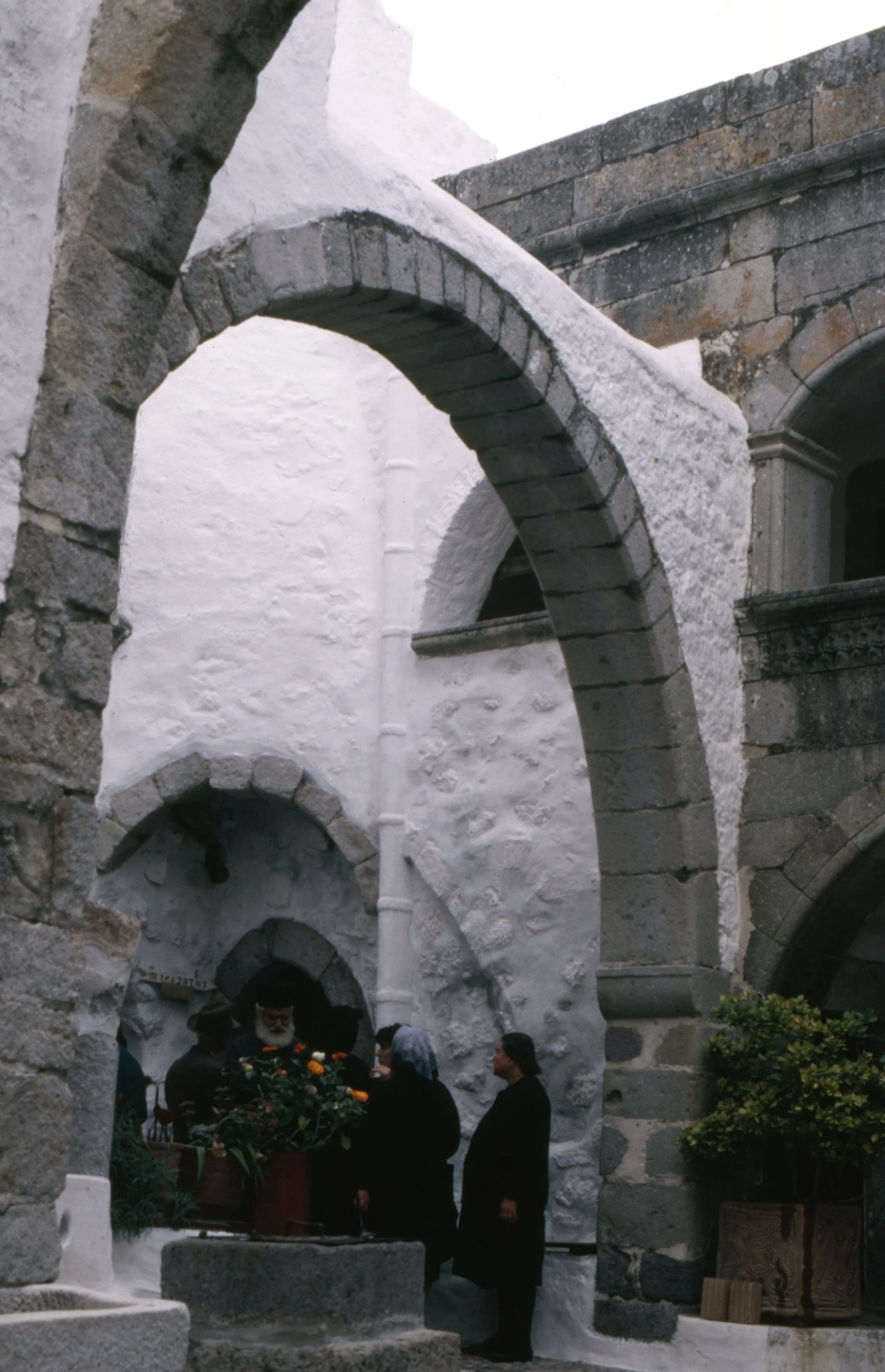
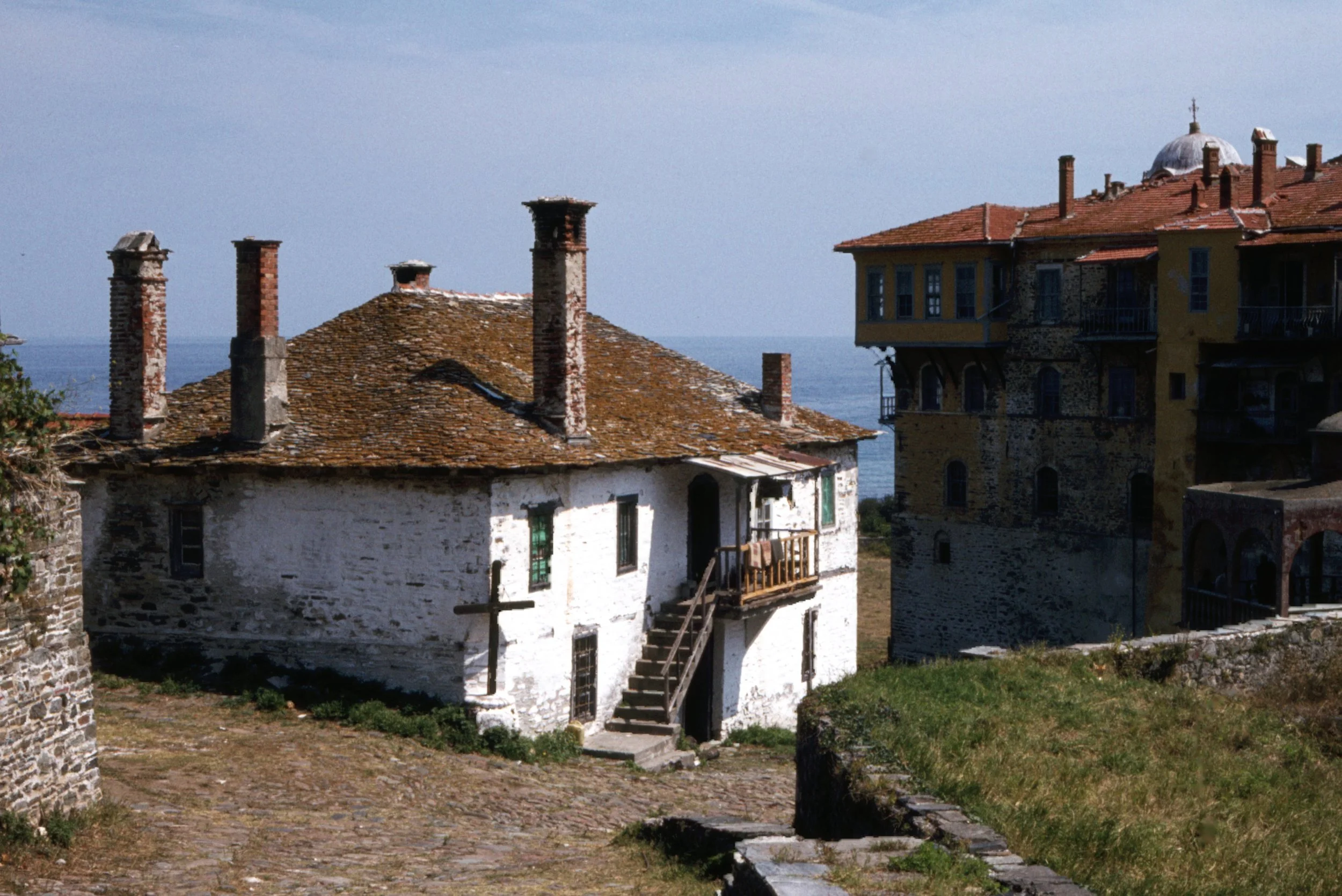
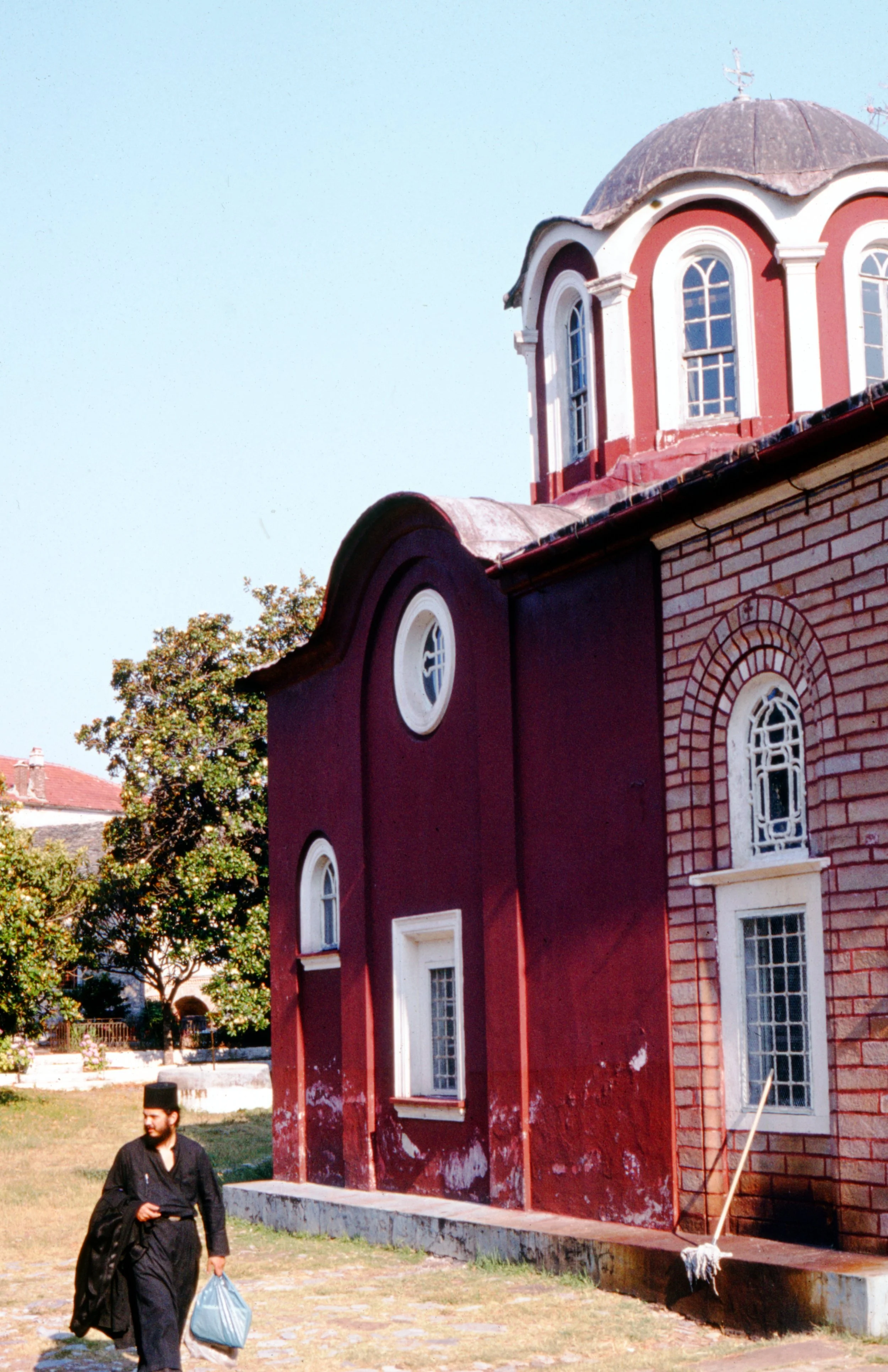
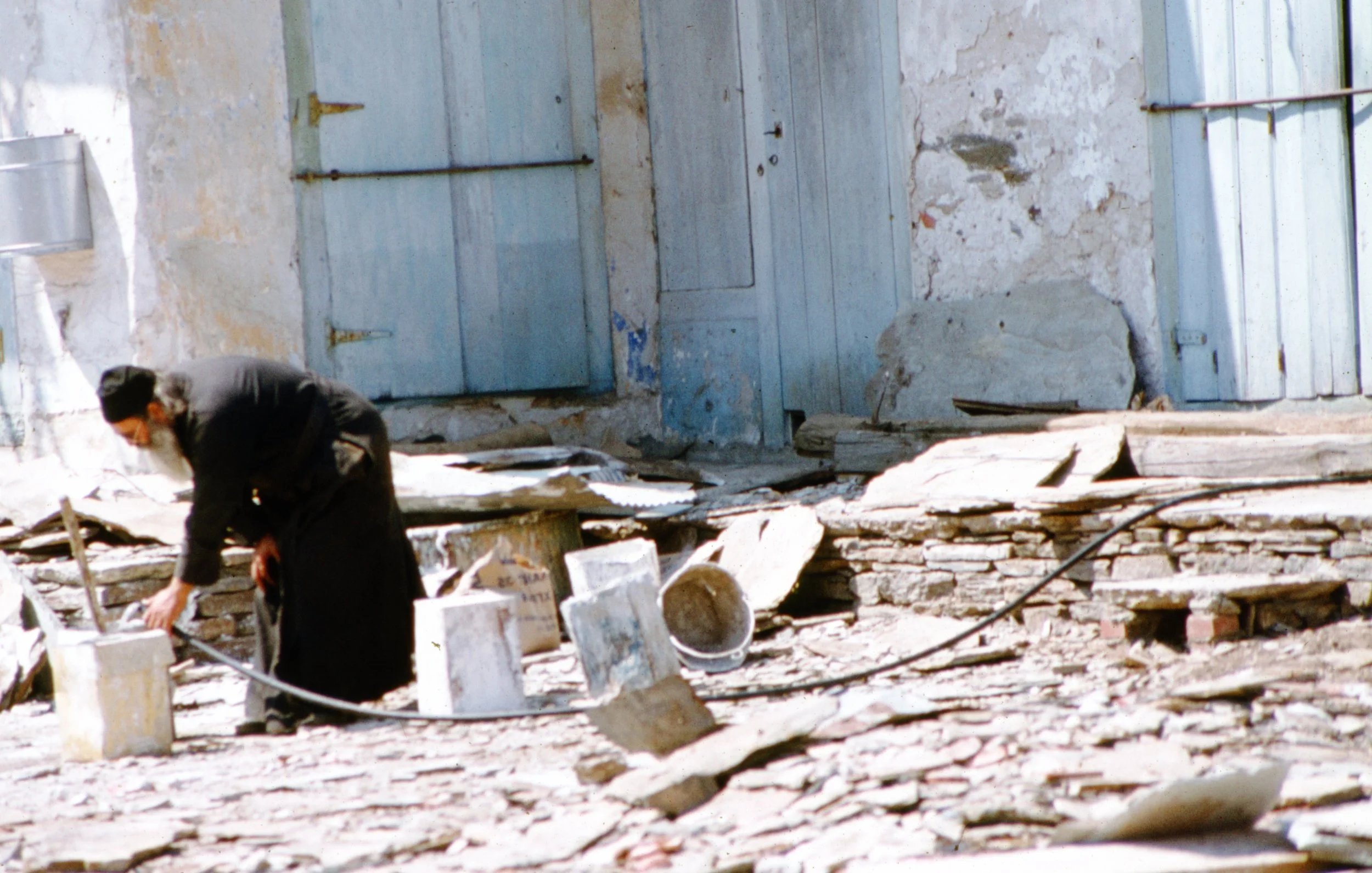
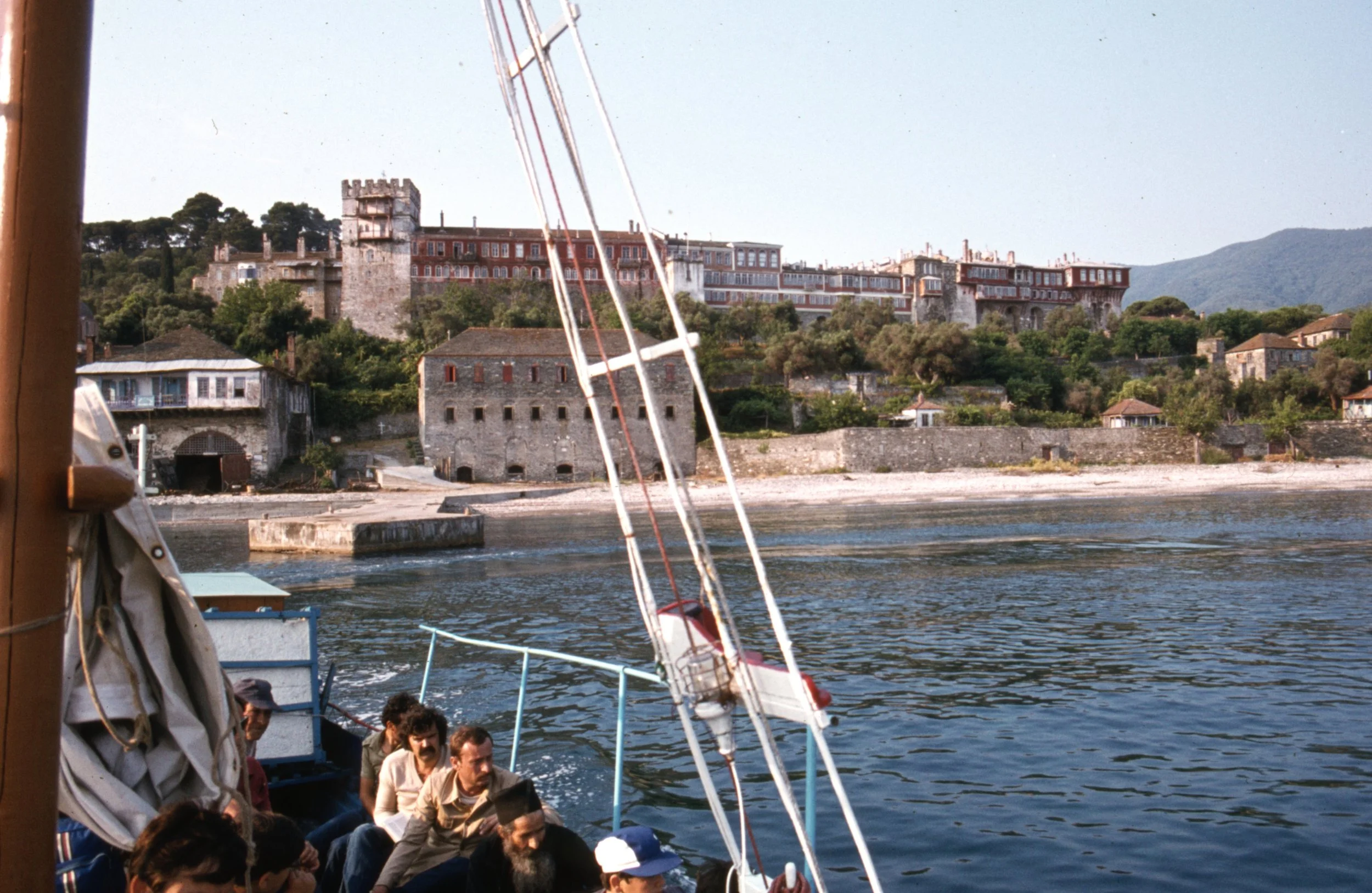
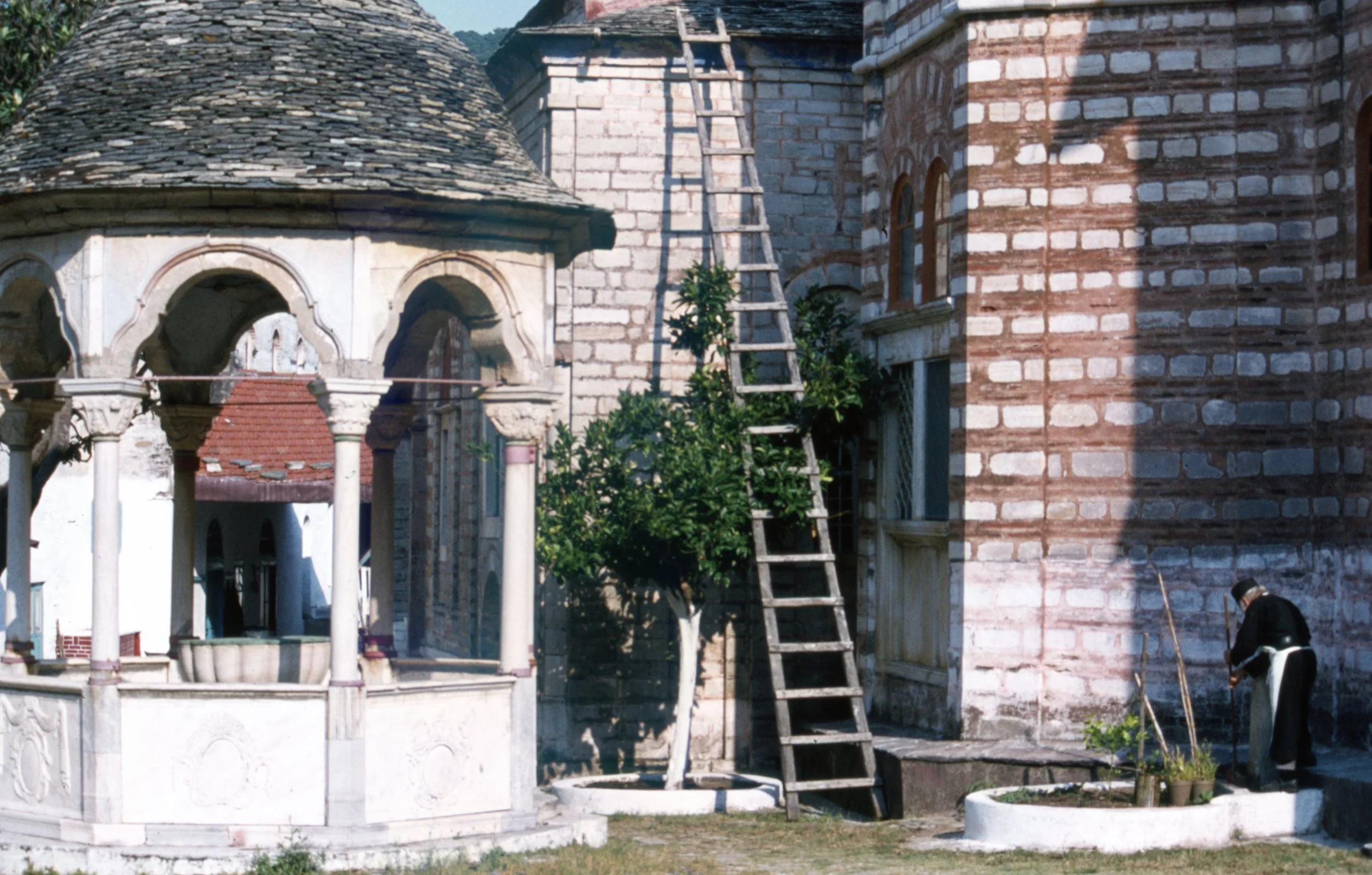
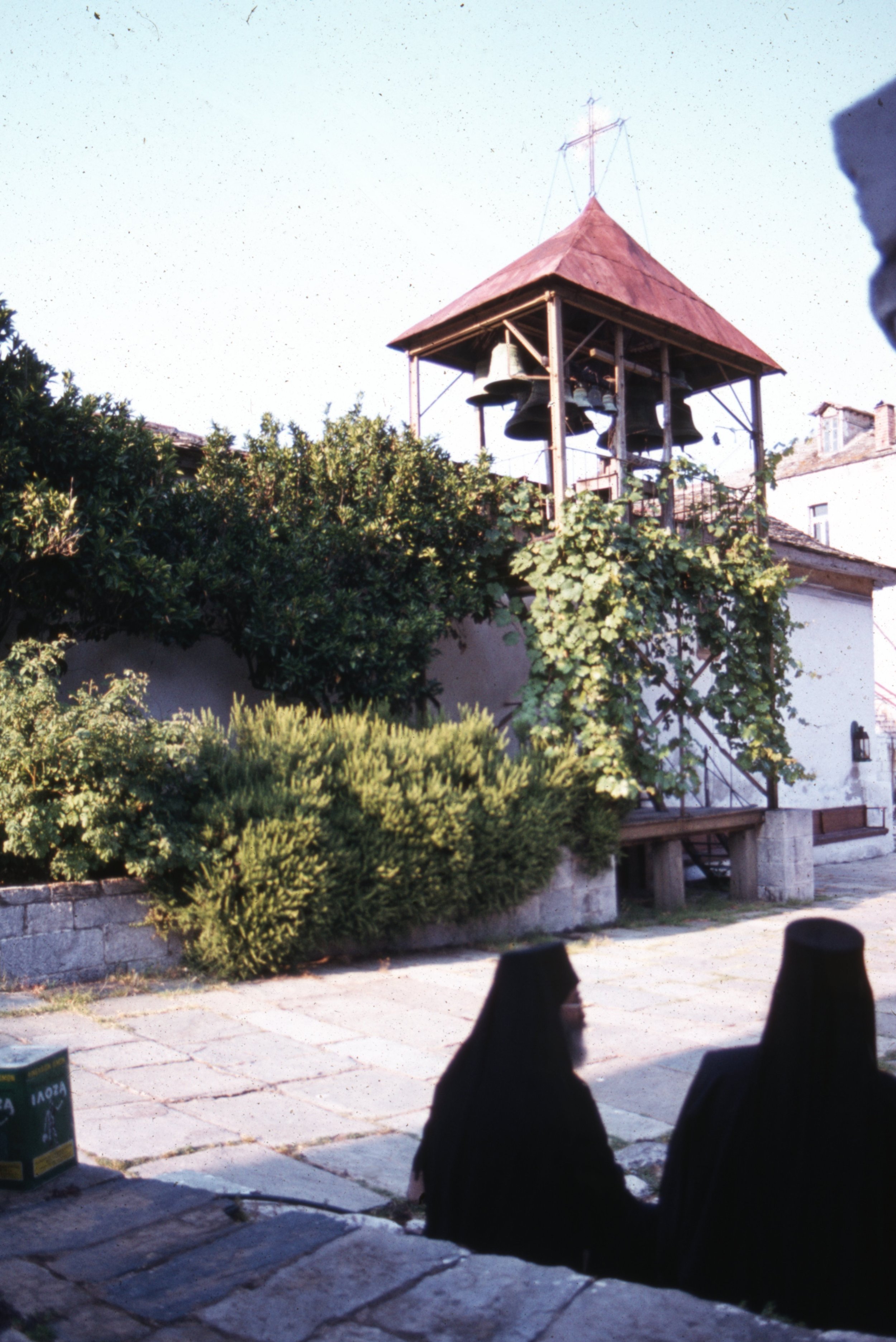
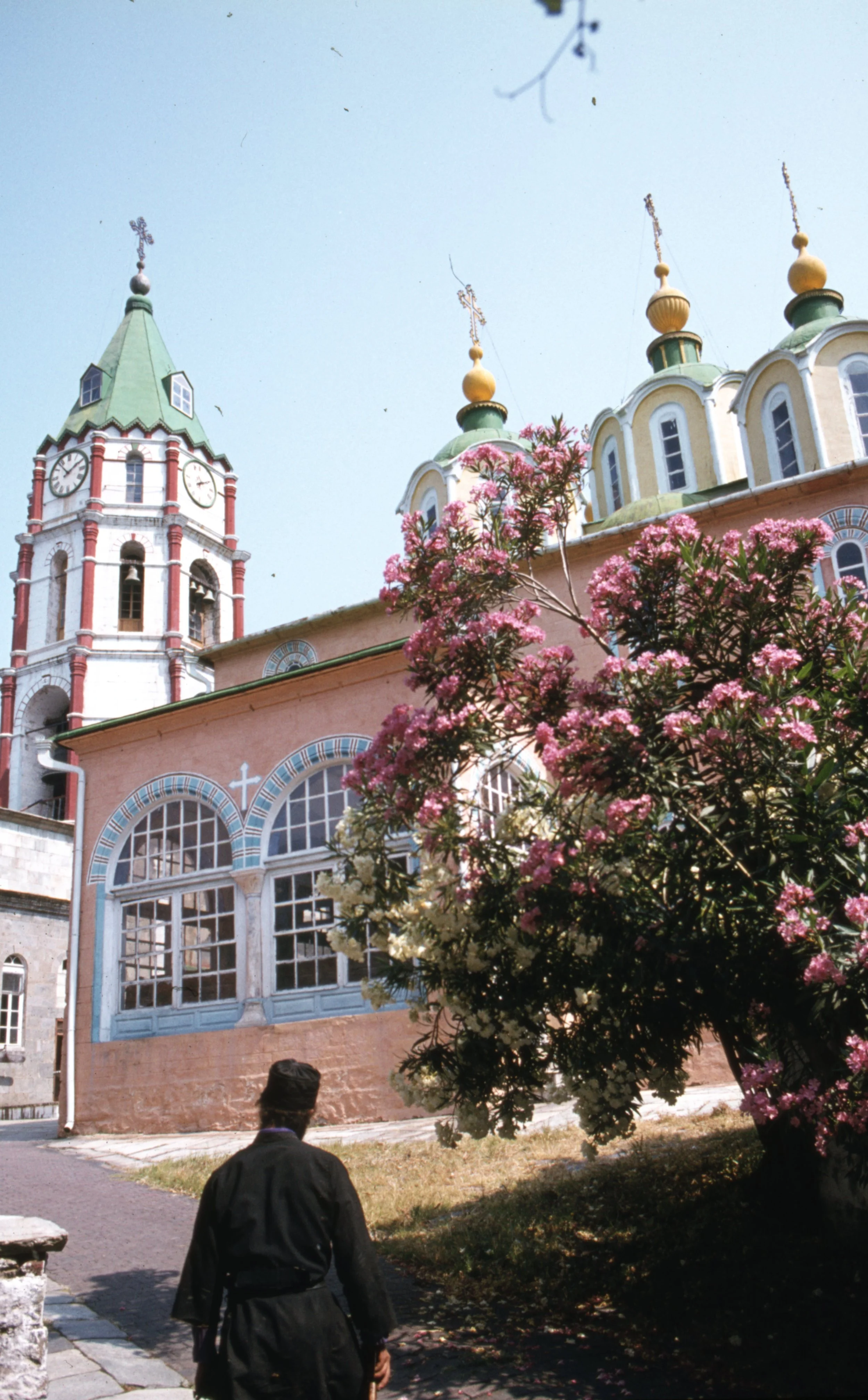
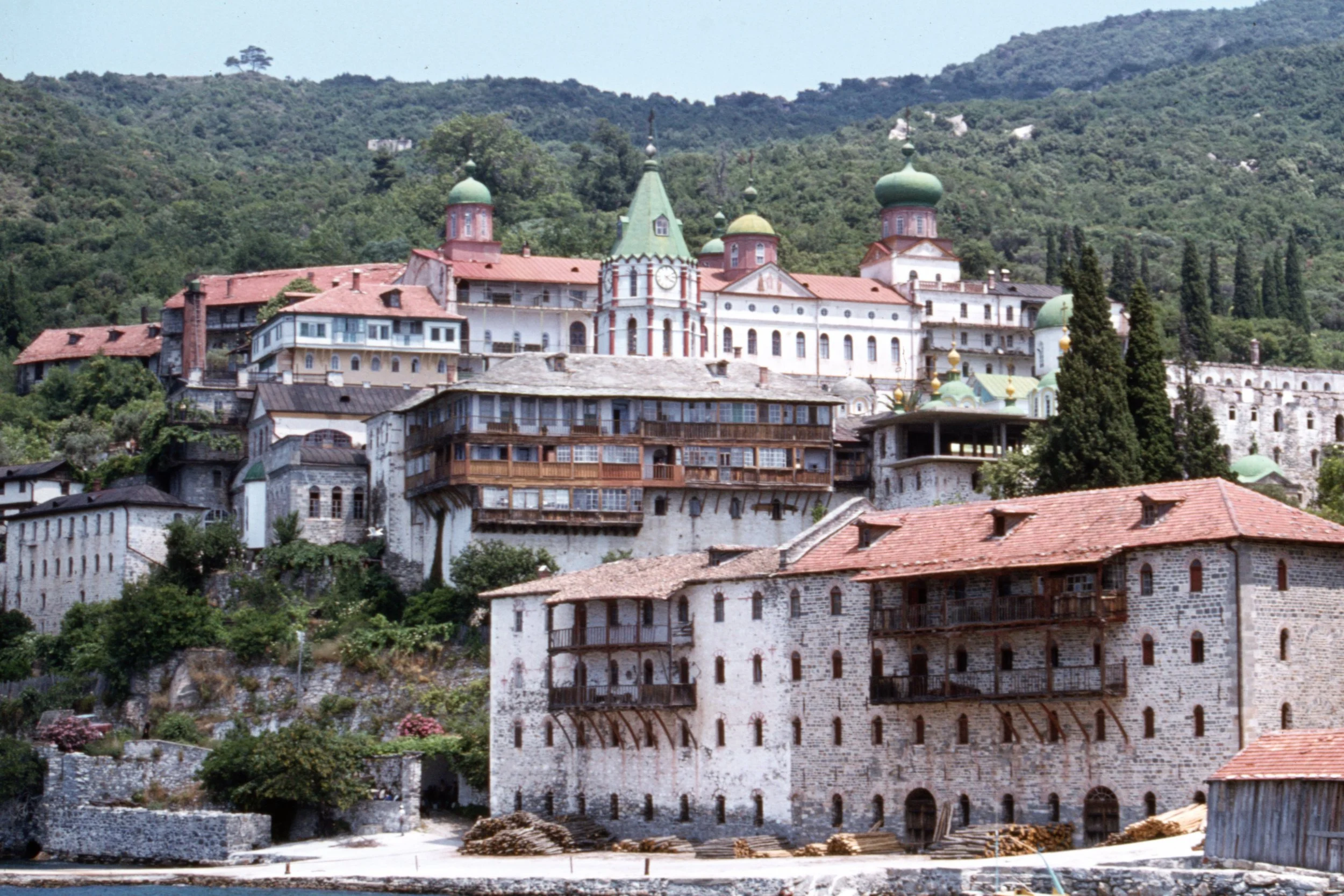
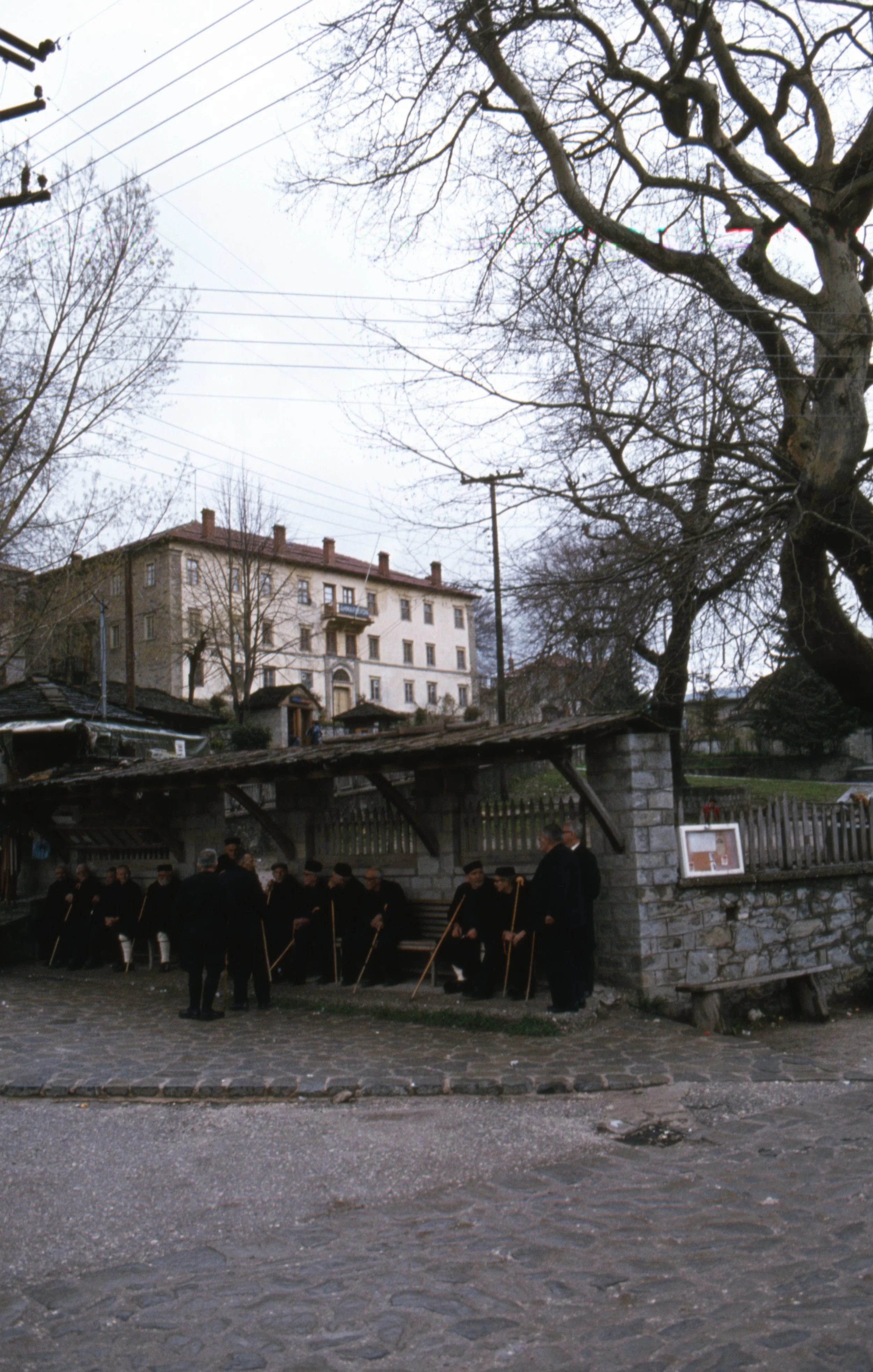
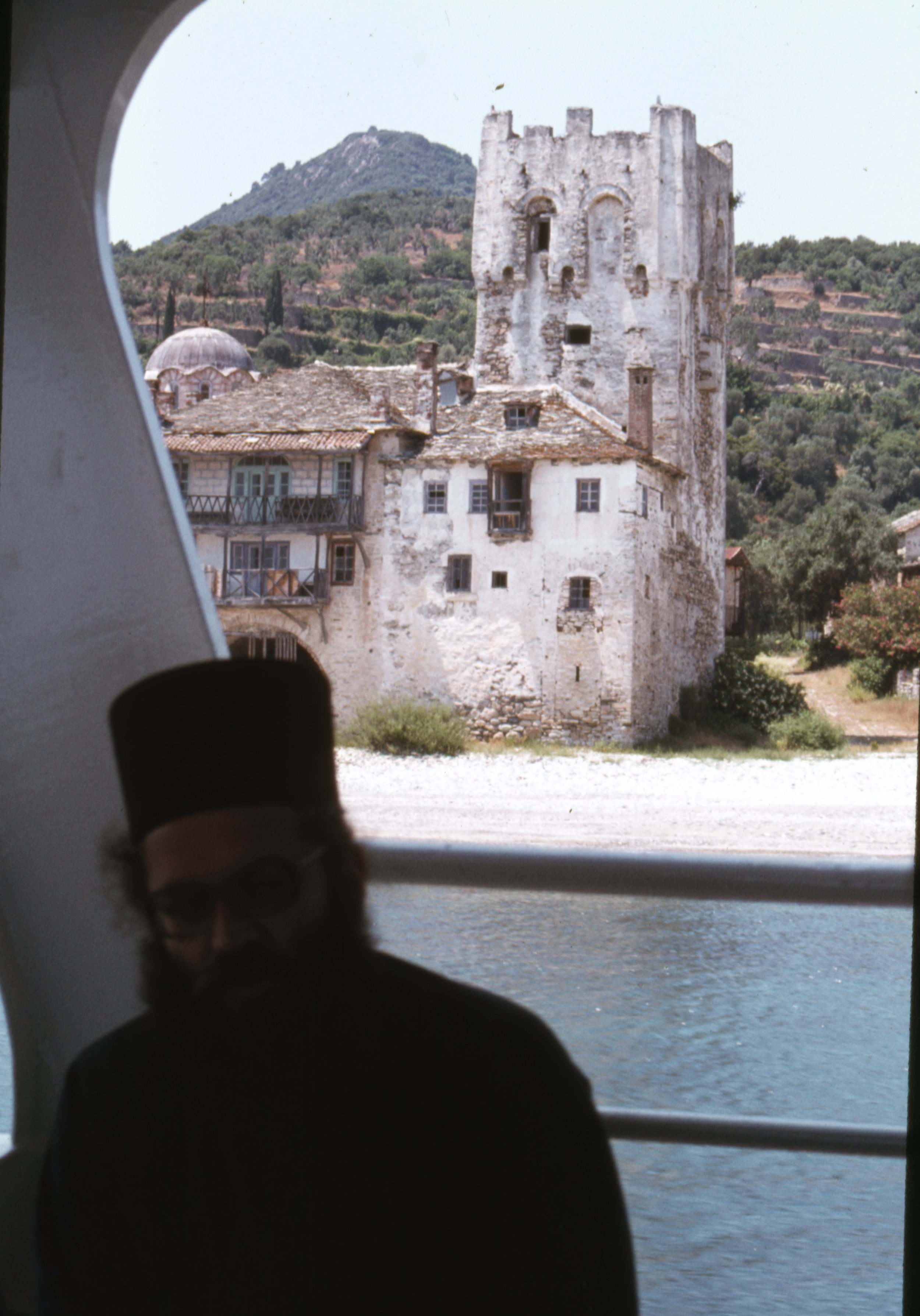
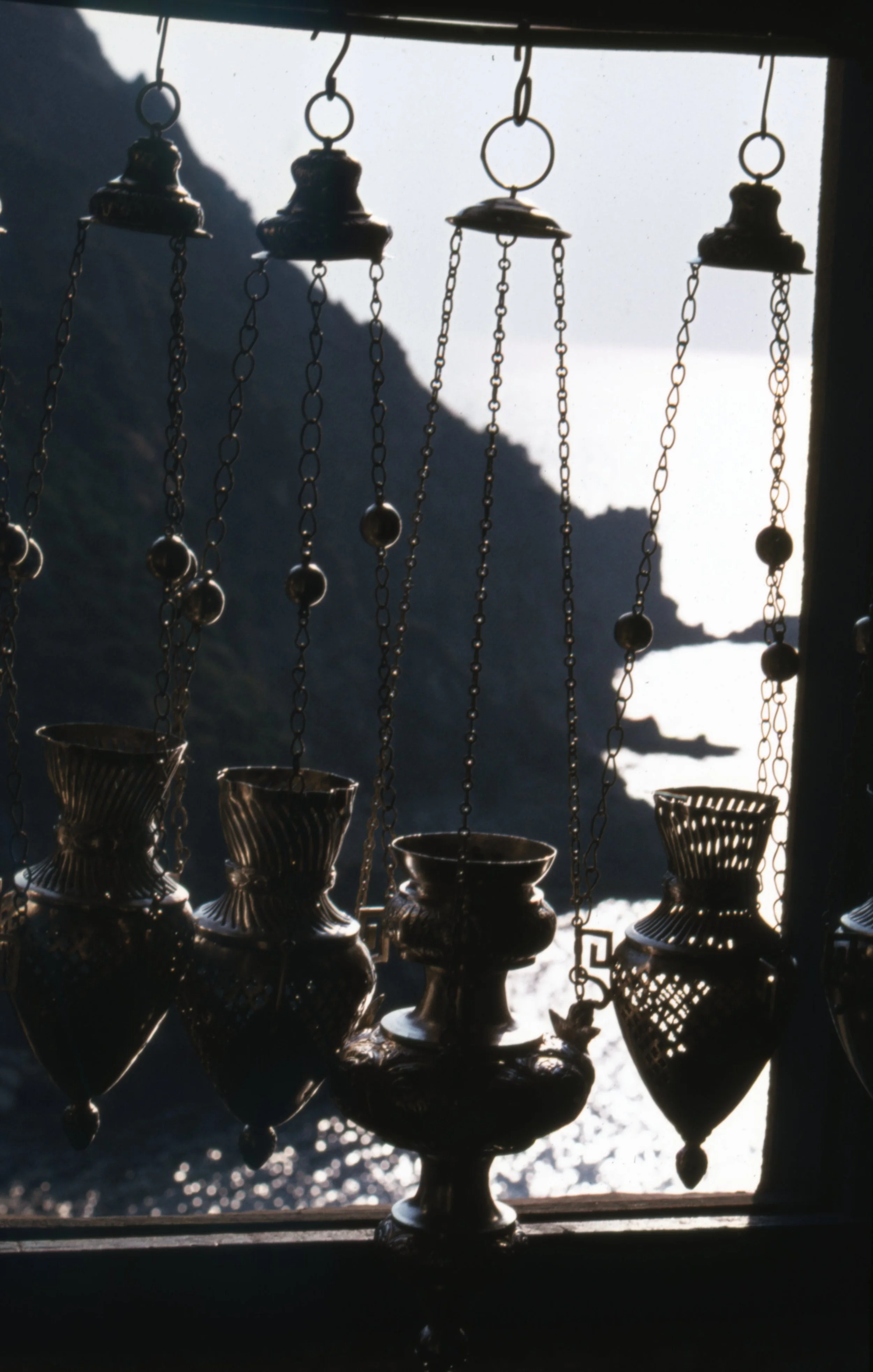
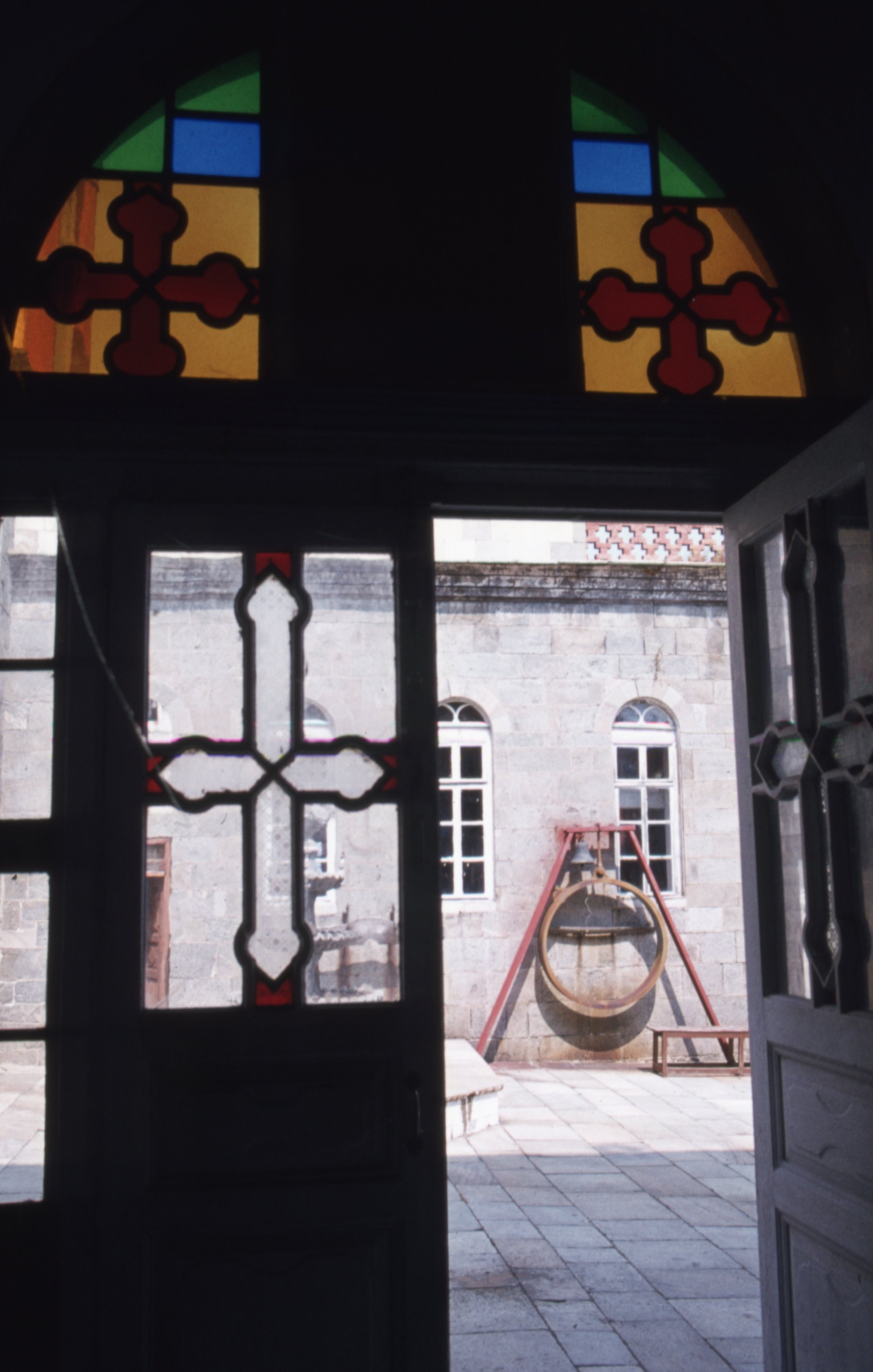
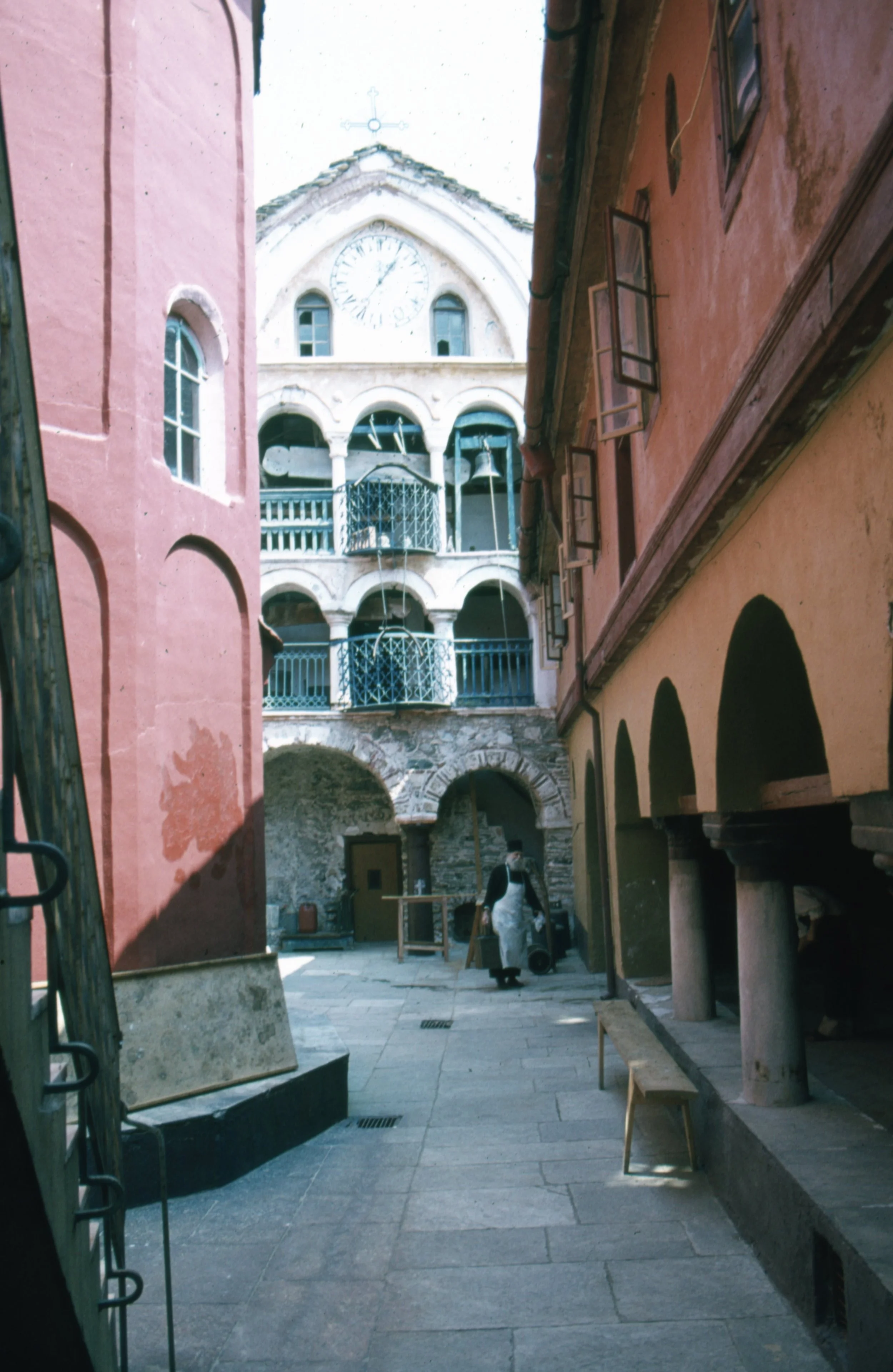
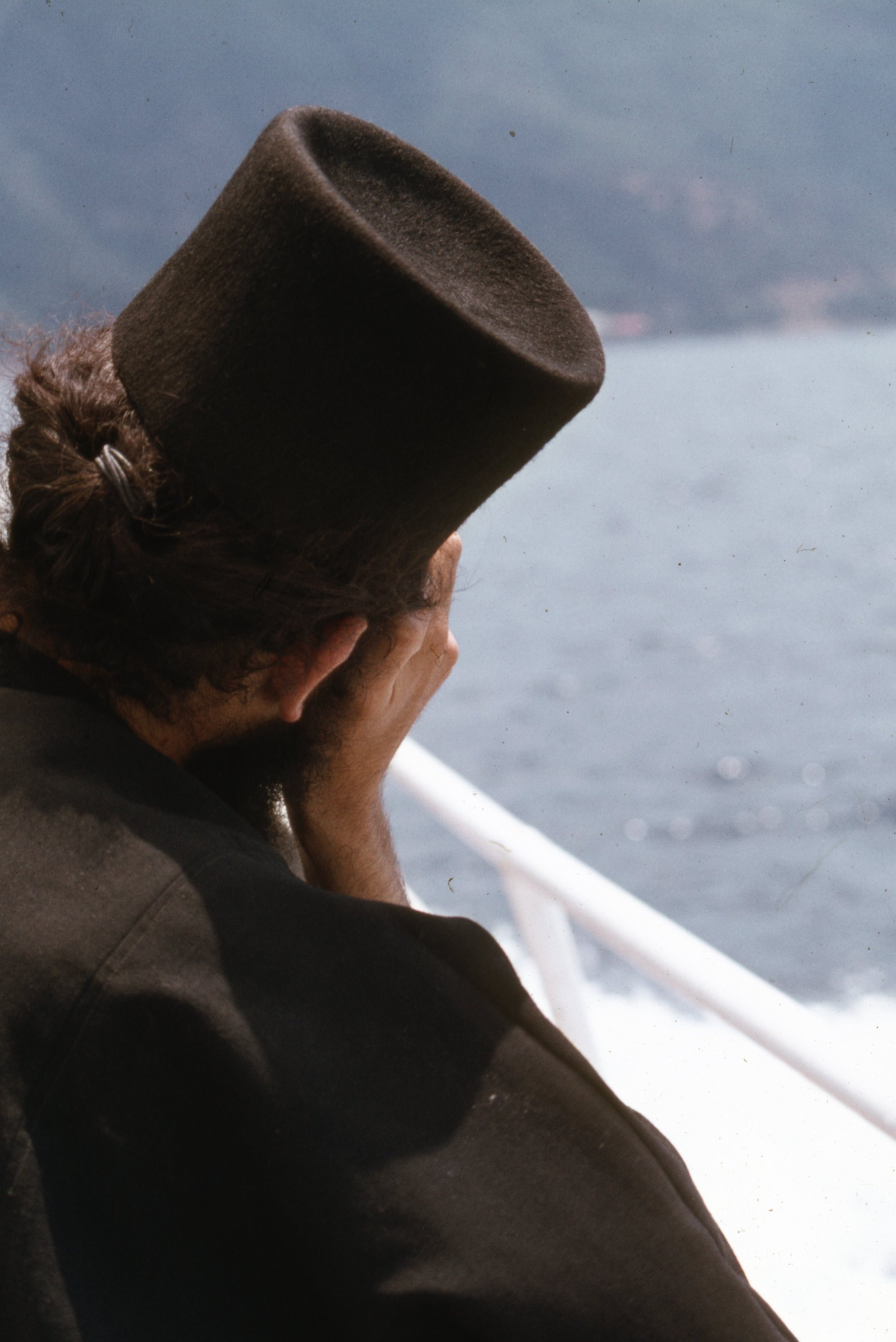
Since Nikos Kolovos carefully selected who he would photograph, it is striking to find that another recurring bodily presence within the archives is that of Orthodox priests. They appear in different scales and distances, such as a priest in an apron crossing a monastery courtyard lined with arches and bells, priests sweeping or cleaning outside worn facades, another walking along the side of a church with a shopping bag, a group of clerics talking with a woman under whitewashed arches, a priest leaning on a ship’s railing, his back to the camera, looking out at the sea. In some images, the clergy members are almost disappearing into the architecture and it is only because of their black silhouettes against stone that allows one to identify the who, whereas in others, the camera is close enough to isolate their profile against water or sky.
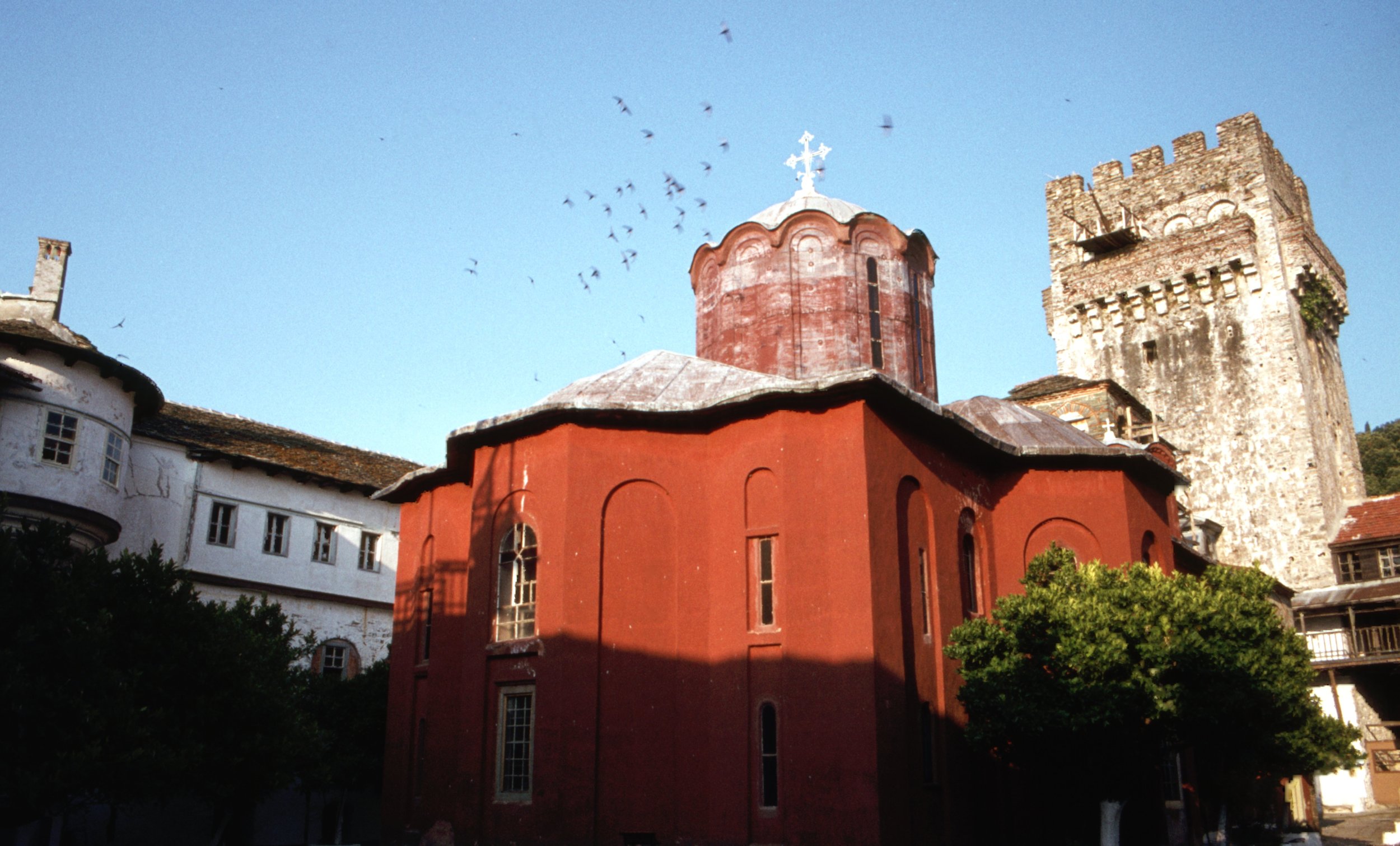
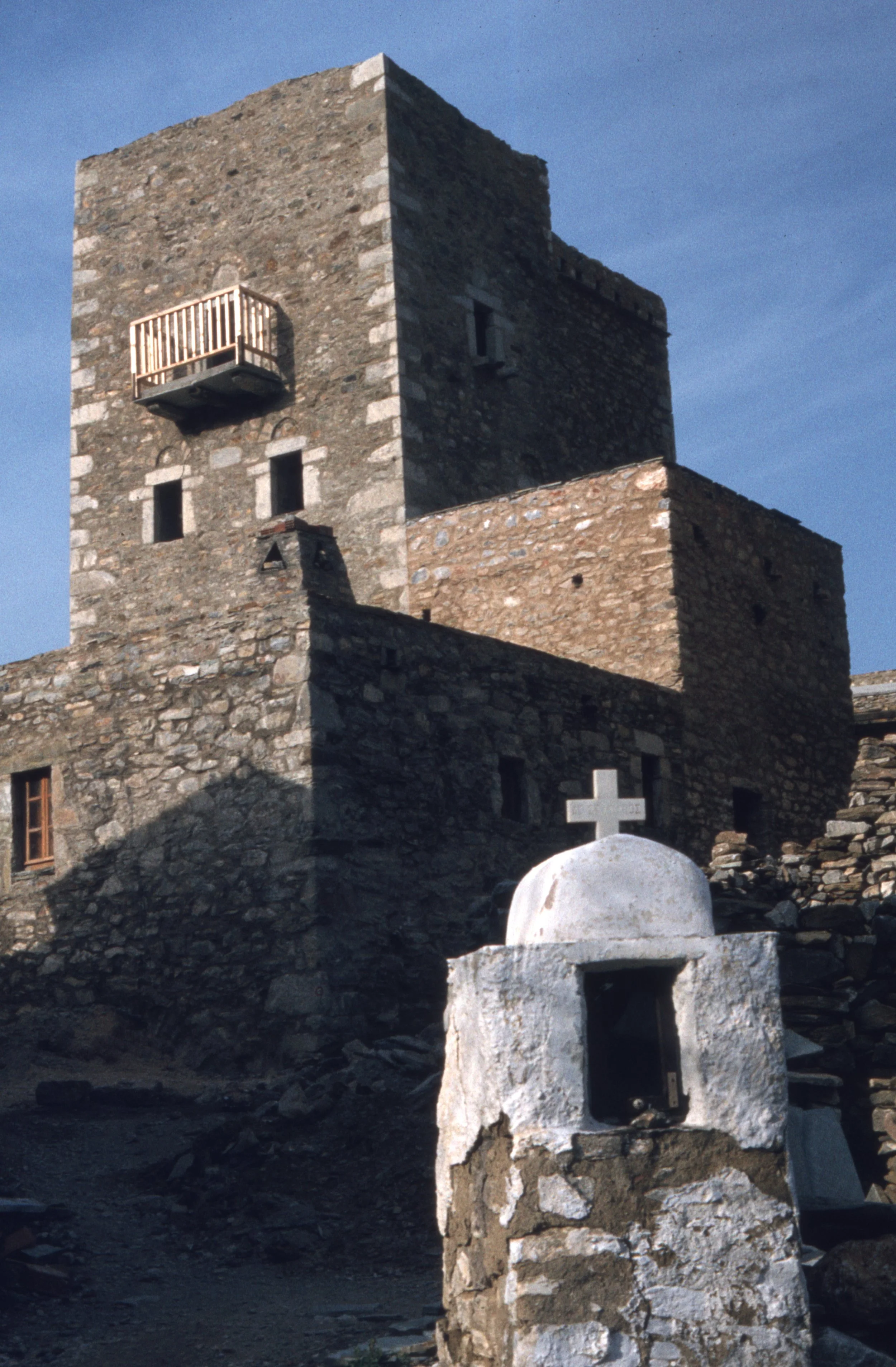
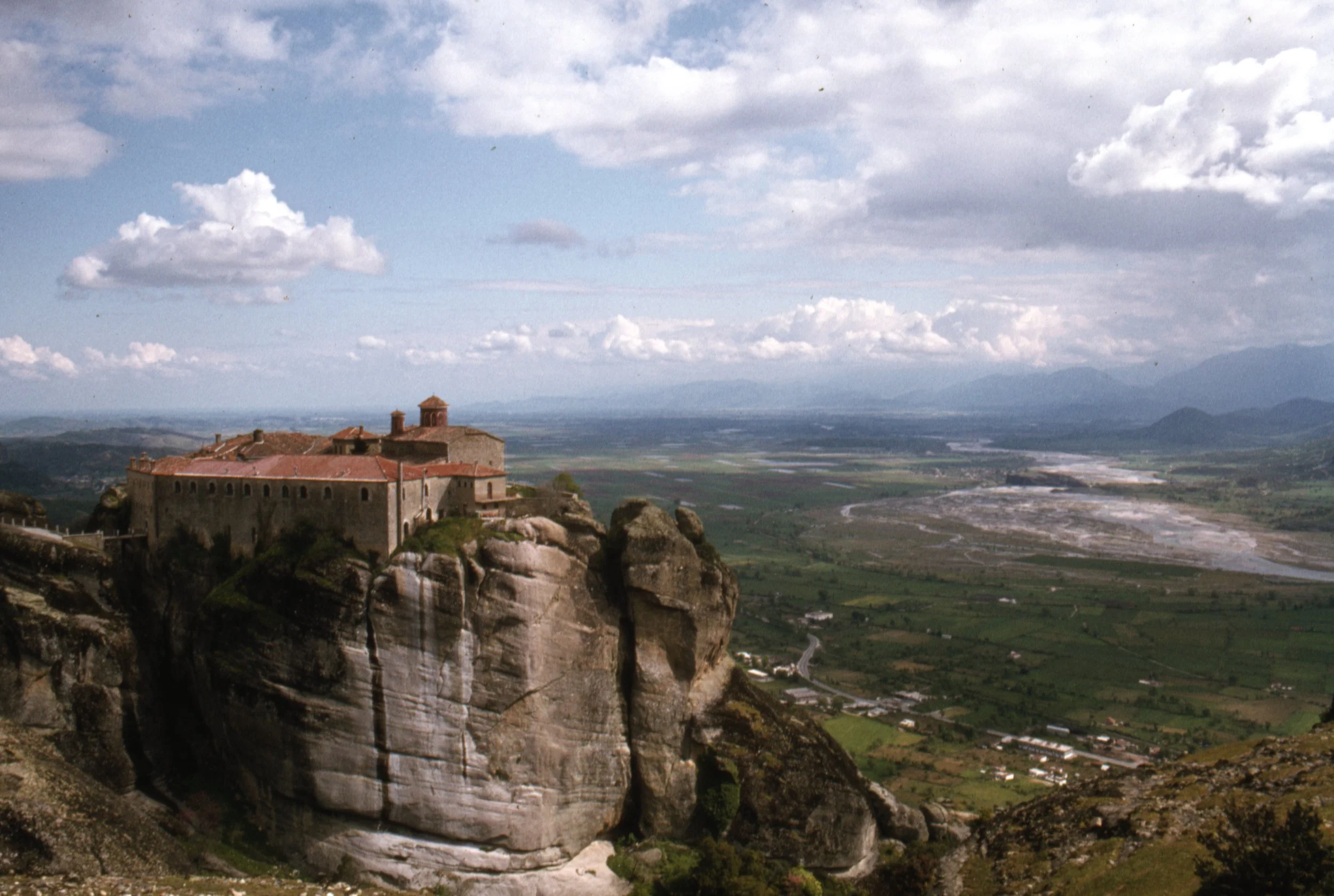
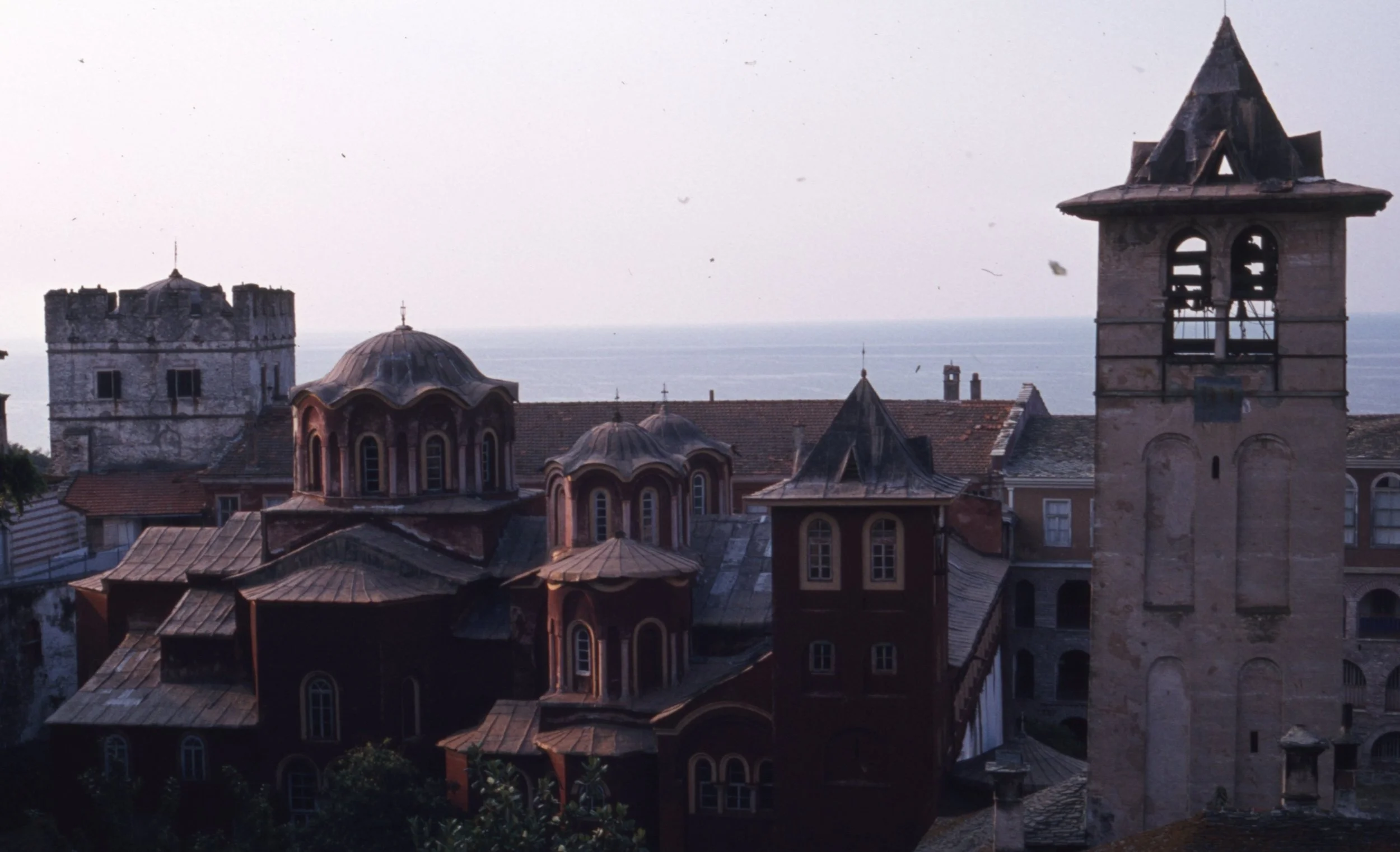
These photographs refuse the standard, or monumental, image of the Church. The buildings are present but often partially cropped, the focus is on corridors, entrances and courtyards rather than a priest at his lectern reciting from the scripture. The priests are captured in transitional moments or during their work, once again, either walking, carrying, cleaning, waiting or looking. They belong to the same everyday patterns as the rural laborers and villagers elsewhere in the archive. As such, Nikos Kolovos treats these clerical figures as part of what Tuan (1977) calls the “field of care” that makes a place through a group who moves through and maintains the spaces he photographs rather than representatives of an untouchable or abstract institution.
Biographically speaking, the presence of priests is emotionally charged. According to family stories, Nikos Kolovos was critical of the Greek Orthodox Church as an institution and politically aligned with the communist left in these beliefs. At the same time, however, it was Orthodox priests who convinced his father that he should not become a bus driver like the rest of the family, but instead complete and pursue higher education and university. They intervened on his behalf, in his life, at a decisive and formative moment, opening a path that removed him from a blue-collar life into law, film studies and academic work. I cannot know how consciously Nikos Kolovos connected these experiences to his photographs, but it is difficult not to view the images of priests as ambivalent by both resentment towards the institution, perhaps.
This story may explain why the clerical figures here are neither idolized nor mocked. Instead, they are shown doing what everyone else in the archive does, which is working, travelling or performing some form of care or maintenance. The priest bending over buckets, or the man walking past a peeling wall, removes, in a way, the religious authority to ground level. Berger’s (2013) notion of looking at an image and seeing what people actually do with their bodies rather than abstract roles is useful here. In these photographs, clerical life and priesthood become a set of gestures and tasks embedded in material and architectural surroundings, not a theological or mythical one.
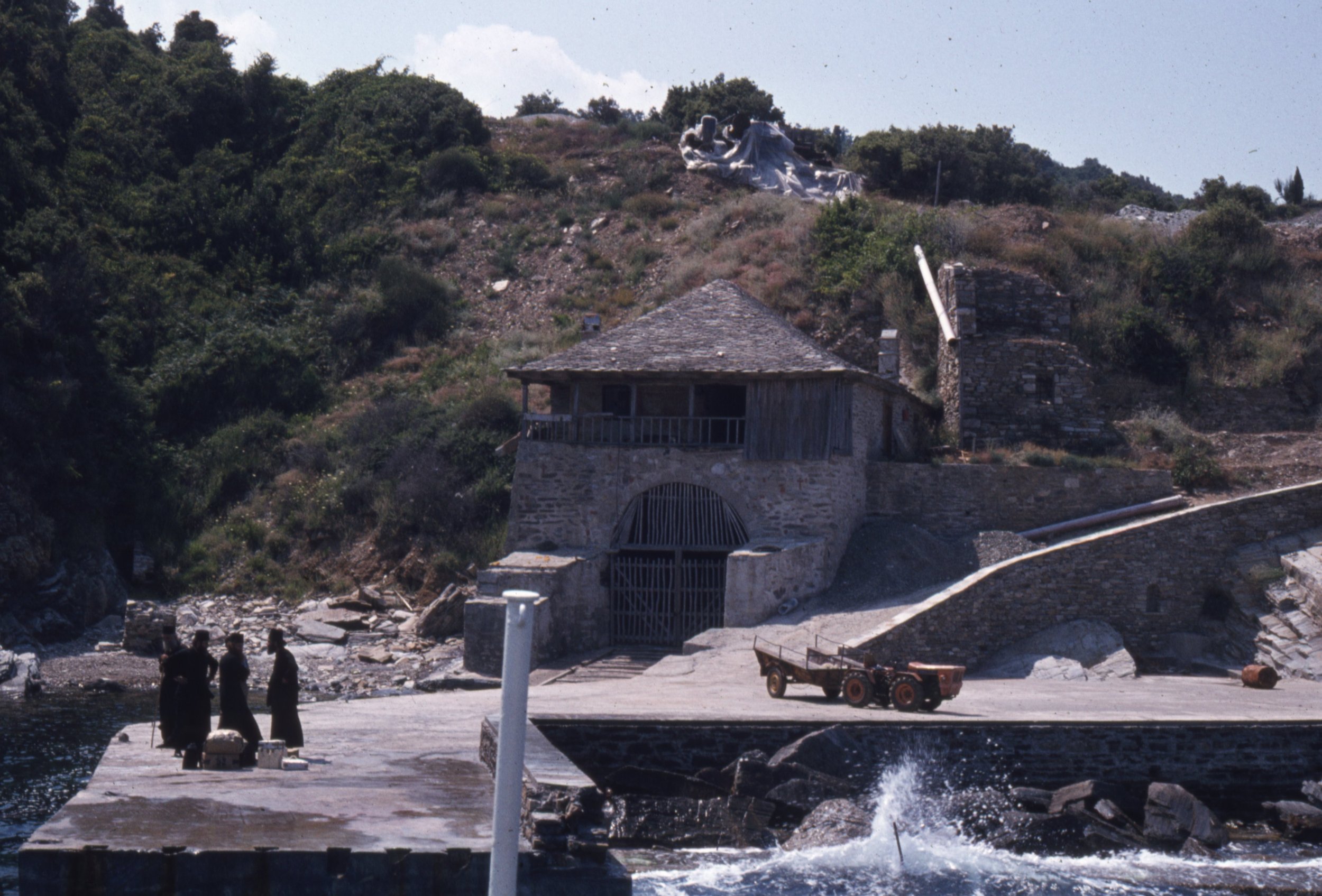
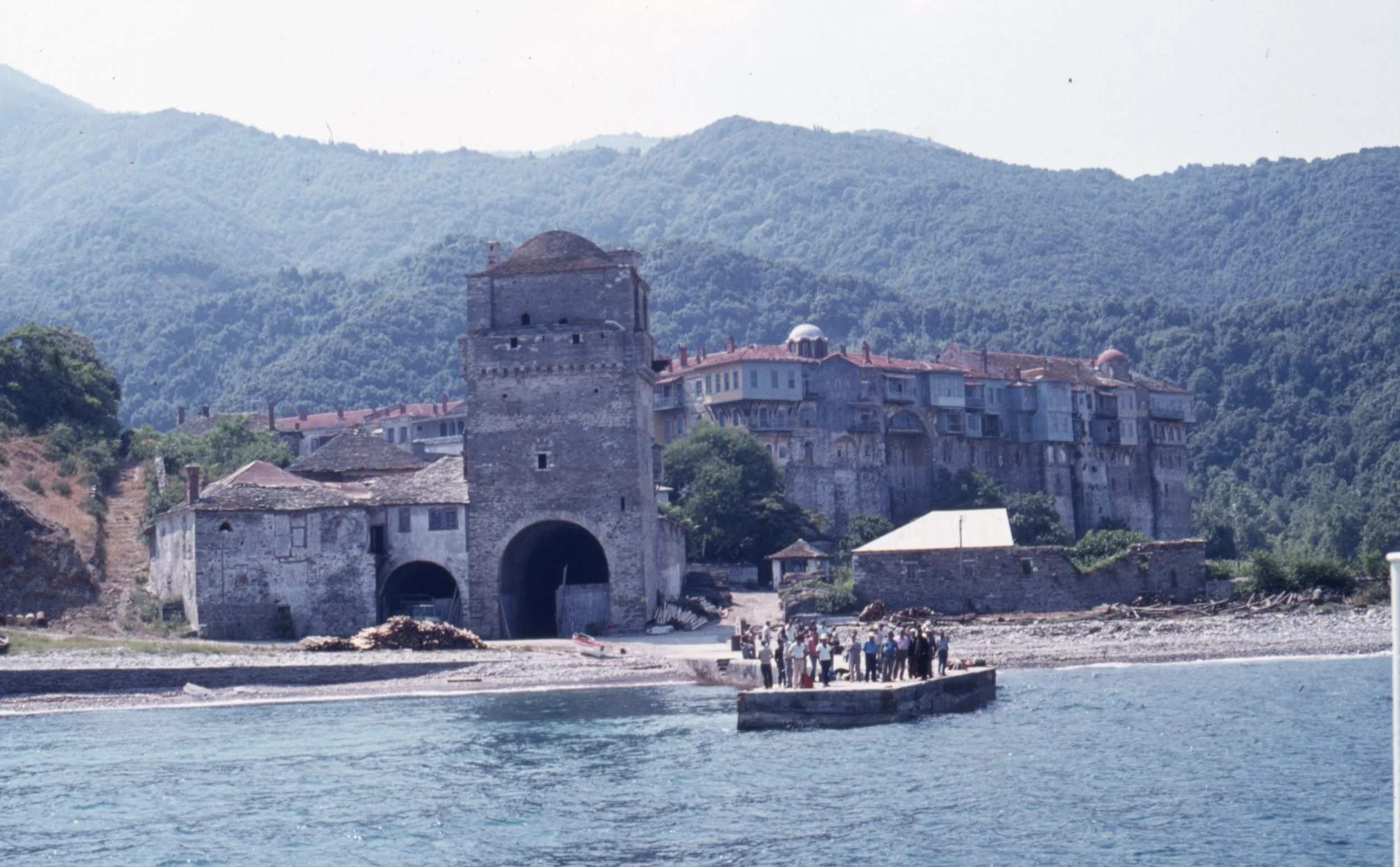
At the same time, however, these priests often occupy border or threshold spaces. Architecturally, they stand in doorways, under arches, or on docks while waiting for the ship to come pick them up. These are in-between spaces, from inside to outside, land to sea, village to monastery. Anderson’s (2009) notion of affective atmospheres suggests that the mood or tone of these images is neither pious nor openly critical, but suspended. The priest on the boat and the priests on the docks, in particular, appear to be crossing between secular and sacred spaces. By photographing priests and clerical figures in these in-between spaces, Nikos Kolovos appears to be conveying their role within the social landscape, similar to children and rural laborers, while also keeping a distance.
For me, as a posthumous storyteller who views these images later, the archive offers a wayto understand his relation to religion without turning it into a story of overt faith or explicit rejection. They suggest that he held a complex position towards the Greek Orthodox church, politically opposed to clerical authority in government, as known from stories told by family members, yet personally shaped by priests who intervened on his behalf. Viewing the repetition of these figures across the entire archive, seeing whether they stand, what they do, how they are.